

Email: [email protected]Phone: 800.245.5676
/blog/the-evolution-of-the-concept2-rowerg
The Evolution of the Concept2 RowErg
Jul 20, 2026
Share
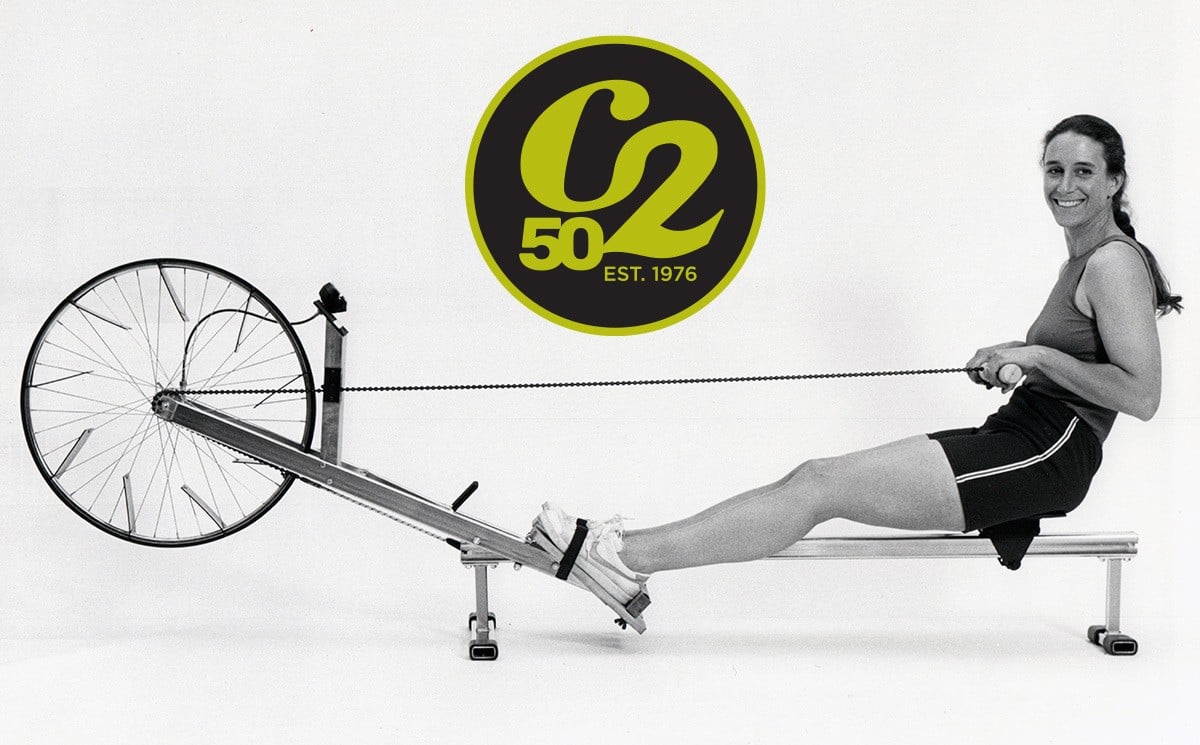
Co-Founder Bari Dreissigacker on the Concept2 Model A.
Setting up shop on a former dairy farm in Vermont, Dick and Peter Dreissigacker started looking for another product to make after they launched their carbon fiber oars in 1976. A few years later, they faced a familiar challenge shared by rowers everywhere: what do you do when the water freezes? They needed a way to keep training through the winter while also keeping the Concept2 staff busy during the off-season. The answer was to build an indoor rowing machine that actually felt like rowing.
At the time, most rowing machines didn't come close.
“They (Dick and Peter Dreissigacker) took an old bicycle and turned it upside down and nailed it to the floor and got a sliding seat,” said Co-Founder Judy Geer. “Compared to other rowing machines, it felt a lot more like rowing on the water.”
That simple prototype laid the foundation for every Concept2 Erg that followed.
Model A (1981–1986): Where It All Began
Loud, rugged and unmistakably handmade, the Model A accomplished something important: it made indoor rowing feel real. Built from straightforward materials—a bicycle wheel, chain drive and flywheel—it gave athletes consistent resistance and featured a speedometer mounted to the unit, allowing them to track their performance.
The Model A was an immediate hit, so much so that the very first indoor rowing race on Concept2s took place shortly afterwards at Harvard’s boathouse in early 1982.
Model B (1986–1993): Indoor Racing Takes Off
The Model B introduced important advancements in durability, airflow and overall rowing feel. The bicycle wheel was replaced with a custom flywheel and a smoother roller clutch drive, while a wind damper extension ring allowed users to adjust airflow, allowing for finer tuned resistance based on the athlete’s preference or the type of water they may face during a race.
The speedometer was replaced with the first electronic Performance Monitor (PM), which delivered accurate and self-calibrating results that could be compared from one Erg to another. Athletes could now train and compete using a common standard.
As indoor racing gained momentum through events like the CRASH-B Sprints in Boston and satellite races across the US and Europe, athletes from different clubs, regions and countries could compete on equal terms.
Model C (1993–2003): The Erg Goes Mainstream
The Model C helped bring indoor rowing beyond rowing teams and boathouses.
It featured an enclosed flywheel design and quieter operation, a lever-operated wind damper with settings from 1 to 10, a flexfoot system, an adjustable Performance Monitor arm, a wider monorail, an improved seat and seat rollers, caster wheels and the ability to separate the Erg into two parts for storage. The updated Performance Monitor, the PM2, added more workout options while providing reliable data.
“We were surprised how naturally the Erg spread from rowing to the fitness world,” says Peter.
Model D (2003–2021): The Gold Standard
The Model D helped define modern indoor rowing and set the standard for rowing programs, fitness facilities, CrossFit affiliates and home users.
The updates were practical but meaningful: a quieter unit, redesigned ergonomic handle, improved foot stretchers, refined flywheel housing and damper design, easier damper adjustment and a smoother frame lock connection for easier separation and storage. The Model D also introduced the PM3, a more powerful Performance Monitor that expanded workout options and continued to deliver the consistent results athletes relied on.
Model E (2006–2021): Built for Accessibility
The Model E shared the same flywheel as the Model D but introduced a seat 6 inches higher off the ground, making it easier to get on and off the rower for those with mobility concerns.
The fourth-generation Performance Monitor, the PM4, added features such as games and wireless ANT+ connectivity. In 2014, the PM5 expanded those capabilities further with Bluetooth, ANT+ connectivity, a backlit LCD screen and compatibility with heart rate monitors and apps like ErgData. The PM5 became the Performance Monitor used on later Model D and E machines and continues to be used on today’s RowErgs.
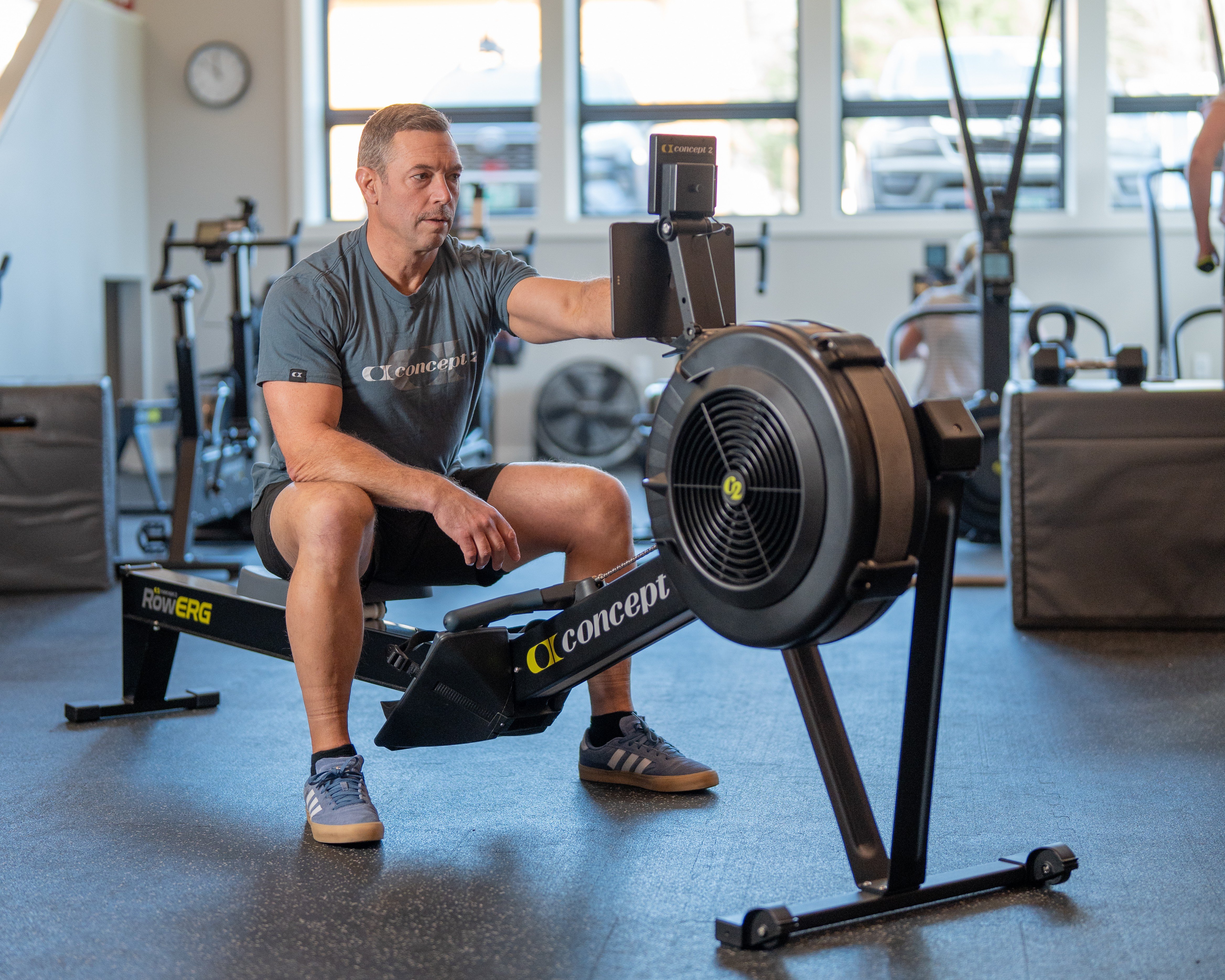
RowErg (2021–Present): The Modern Era
In 2021, we simplified the naming of our indoor rowers. The Model D became the RowErg with standard legs and the Model E became the RowErg with tall legs. The tall leg version also gained an adjustable monitor arm. Both RowErgs are available in our classic black finish and have refreshed branding to reflect the new product name.
The names changed, but the focus remained the same. Every RowErg is equipped with the PM5, bringing together decades of development behind both the Erg and the Performance Monitor. Today, the RowErg continues to serve rowers, athletes and fitness communities around the world.
Still Evolving
The Concept2 RowErg has come a long way since an upside-down bicycle wheel was bolted to a workshop floor in Vermont. Decades later, the products have evolved, but the mission remains remarkably simple: design, manufacture, sell and support unique products of the highest quality and value for the benefit of the Concept2 community. That mission has shaped every Erg, from the original Model A to today’s RowErg, and it continues to guide what comes next.
There’s more to explore. Visit 50 Years of Concept2 for more stories and a look back at the people, products and moments that have shaped the last 50 years.
Recent Posts
Tags: