

Email: [email protected]Phone: 800.245.5676
Winter Athletes are Made in the Summer
Sep 29, 2025
Share

Meet Dani Aravich, a multi-time summer and winter Paralympian, disability advocate, and co-founder of Culxtured. Read below how Dani prepares for cross country skiing and biathlon in the summer and fall.
When most people think of winter sports, they picture snow-covered trails, skis gliding effortlessly, and targets being knocked down on the biathlon range. But for athletes like myself and other nordic skiers & biathletes, the real work begins when the snow is long gone.
You may not know much about the Paralympics, or this might even be your first introduction to it. But let me clarify one thing—we train just as much, and just as hard, as our Olympic counterparts. The hours, the intervals, the strength work, the shooting reps, the attention to detail—it’s all the same. The only real difference is the classification system that ensures fair competition between athletes with different impairments.
I train 15–20 hours each week, year-round (except April, which is my one month “off”). That means in the summer, my “off-season” looks a lot like a different sport entirely. My schedule includes two strength sessions in the gym, three key interval workouts (usually on rollerskis), and plenty of endurance training to build the aerobic foundation I’ll need when race season comes around.
If I’m being honest, my biggest challenge is the “easy” training. Those long, low-intensity sessions are essential for building endurance, but they’re also where I’m most likely to get bored. That’s where variety becomes my best training partner.
This summer and fall, I’ve been leaning on a mix of tools and disciplines to keep training both effective and engaging. My garage has become my personal training center—complete with a bike trainer, free weights, and my Concept2 SkiErg. The SkiErg has been a game-changer for upper-body power and technique work—it’s efficient and perfectly replicates the poling motion I use on snow.
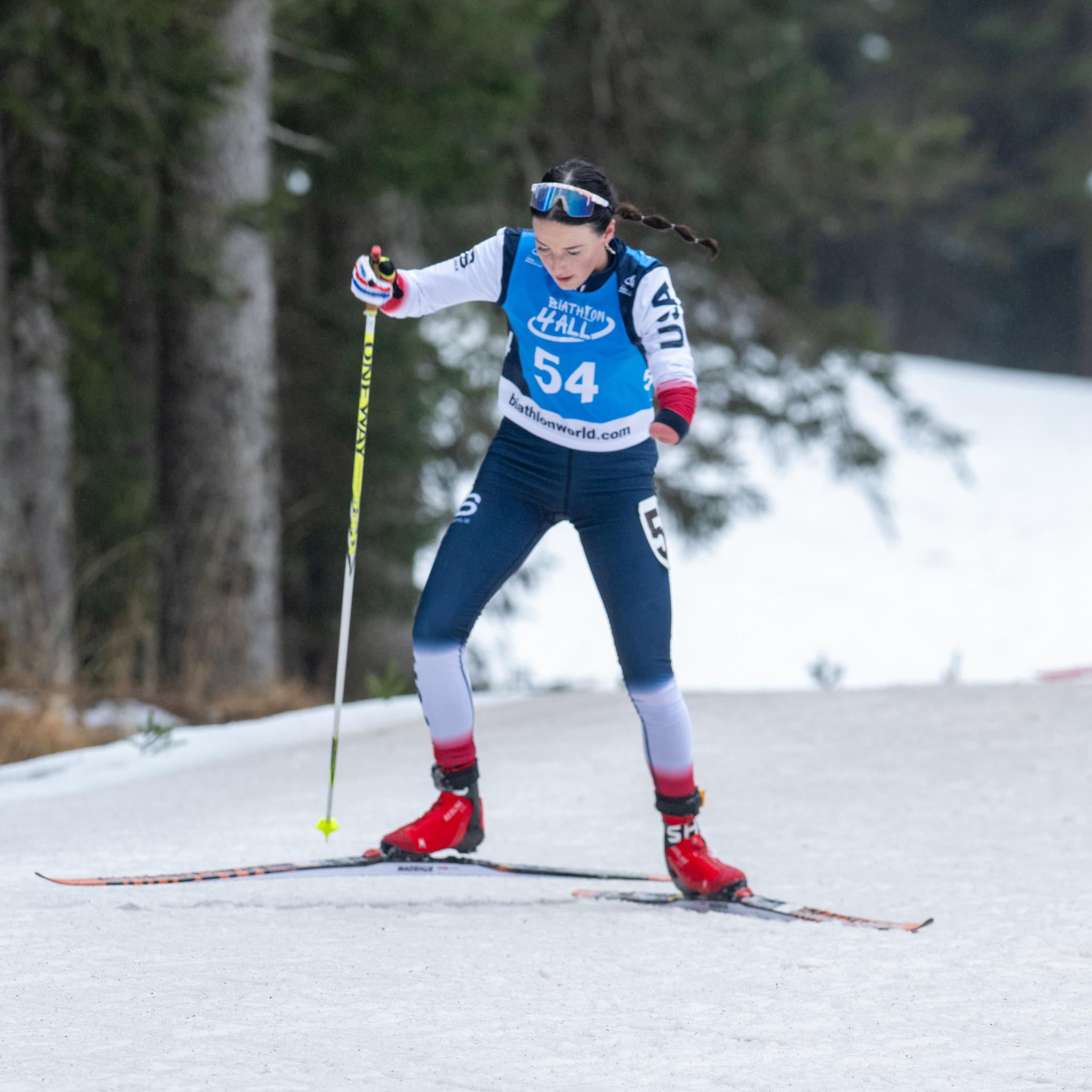
Because of my classification and my missing left hand, I don’t use a ski pole on my left side in winter racing. That means for months at a time, I’m essentially neglecting many of the muscles on my left side. It’s incredibly challenging to create symmetry in your body when one side isn’t engaged the same way. The SkiErg changes that for me. By clipping my prosthetic arm into a carabiner and attaching it to the handle, I can actively train my left side and work on the strength and coordination that I simply can’t get on snow. It’s a simple adaptation, but one that has made a massive difference in my overall balance, power, and injury prevention.
Like many Nordic skiers and biathletes, I don’t rely on fancy training centers. Instead, I find quiet roads for rollerskiing, trails for running, and use my own equipment at home. That independence allows me to train on my own schedule and adapt to whatever conditions the day brings. I’ve also incorporated more cycling to boost endurance and jumped into trail races to keep my competitive spark alive.
Summer and fall training isn’t just about filling time until winter arrives—it’s where the foundation is built. With the 2026 Paralympics in sight, every workout now has extra weight and meaning. The snow may be months away, but the athletes you see racing in the winter? They’re being made right now, in the autumn months and during the heat of summer.
Recent Posts
Get Updates and Training Tips from Concept2
Tags: